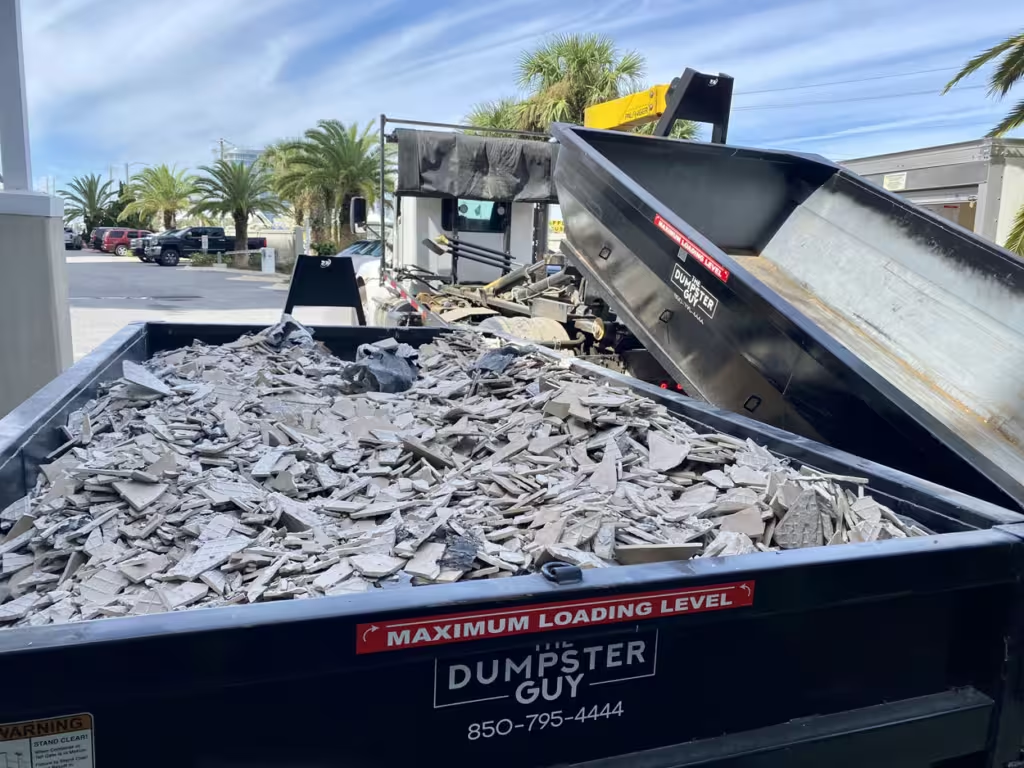
A dumpster's size is about volume, not weight — every roll-off has a separate weight limit, weighed when the loaded truck crosses the scale at the landfill. The Dumpster Guy in Montgomery includes a flat 5-ton limit on its 10-, 15-, and 20-yard dumpsters (above the 1–3 tons many companies include) plus a 10-yard concrete dumpster rated to 10 tons. You go over the limit when dense debris — concrete, dirt, shingles, or brick — fills the weight before the box ever looks full. To avoid overage fees, size up for bulky light loads and put heavy debris in the concrete dumpster.
How much weight can you actually put in a dumpster?
If you've ever wondered how much weight you can put in a dumpster, here's the short answer: it depends on the container's weight limit, not its size. A dumpster's "10-yard" or "20-yard" rating describes volume — how many cubic yards of material it holds — while weight is a separate limit, measured when the loaded truck is weighed at the landfill scale. You can fill a large box with light material and never come close to the cap, or fill a small box with heavy debris and blow right past it.
Most national haulers include just 1 to 3 tons on their 10- to 20-yard dumpsters, which is exactly where a lot of homeowners get surprised by an overage fee. The Dumpster Guy in Montgomery keeps it simpler: every standard 10-, 15-, and 20-yard dumpster includes a flat 5-ton limit, and there's a dedicated 10-yard concrete dumpster rated to 10 tons for heavy debris. For most residential cleanouts and remodels around the River Region, that 5-ton cushion means you never see an overage at all.
Dumpster weight limits by size (Montgomery rates)
Here's what each size holds and what it costs in Montgomery, Prattville, and the surrounding River Region:
10-yard dumpster — 8' wide x 4' tall x 14' long, about 4 pickup-truck loads. 5-ton weight limit. $390 for a 7-day rental ($350 for 3 days), $10 each additional day.
15-yard dumpster — 8' x 5' x 14', about 6 pickup loads. 5-ton limit. $440 for 7 days ($400 for 3 days).
20-yard dumpster — 8' x 6' x 14', about 8 pickup loads. 5-ton limit. $490 for 7 days ($450 for 3 days).
10-yard concrete (heavy-debris) dumpster — 8' x 8' x 14', built for concrete, brick, and fill dirt. 10-ton weight limit. $300 for a 7-day rental.
What overage fees are — and why heavy debris triggers them
An overage fee is an extra charge for any weight over the included limit, billed by the ton. The hauler knows your exact weight because the loaded truck is weighed at the landfill scale on the way in. Across the industry, overage charges commonly run anywhere from $40 to $200 per ton, depending on the region and the local landfill's tipping fees.
The reason people get caught is that weight and volume don't fill up at the same rate. A dumpster can look two-thirds empty and already be over its weight limit if it's packed with dense material — almost always heavy debris like concrete, dirt, or roofing shingles rather than household junk. The fix isn't to guess; it's to put heavy material in the container built for it. With The Dumpster Guy, going over the included tonnage simply means paying for the extra weight, and the team will give you the current per-ton rate up front — so call before you book if you're expecting a heavy load.
The materials that secretly blow past your weight limit
These are the materials that add weight fast, even in small amounts:
Concrete, brick, block, and pavers — a single wheelbarrow of broken concrete can weigh a couple hundred pounds, and a small slab can pass a ton on its own.
Dirt, soil, sod, and sand — fill dirt is deceptively heavy, especially when it's wet.
Asphalt roofing shingles — a tear-off adds up quickly; even a single layer over an average roof runs well over a ton.
Tile, stone, and plaster — dense and heavy by the box.
Anything wet — rain-soaked carpet, drywall, or yard debris weighs far more than it looks.
Use the heavy-debris dumpster for concrete and dirt
This is the single biggest way to avoid an overage. Don't load concrete, brick, or fill dirt into a standard roll-off — put it in The Dumpster Guy's 10-yard concrete dumpster, which is rated to 10 tons for exactly this kind of material. If your project also produces wet concrete slurry from rinsing out mixers or equipment, that's a separate service called concrete washout, handled in its own dedicated container rather than a debris dumpster.
How to estimate your debris weight before you book
You don't need a scale — just a sense of what you're throwing away. Light, bulky material is your friend: furniture, cardboard, drywall, carpet, and general household clutter rarely approach 5 tons even in a full 20-yard dumpster, so you'll run out of space long before you run out of weight. Those are the jobs where you size up for room, not for the cap.
Weight becomes the limiting factor when the load is dense. Roofing tear-offs, bathroom and kitchen demo with tile, landscaping with dirt and sod, and any masonry will reach the limit quickly. For those projects, either choose the heavy-debris dumpster or keep the heavy material in its own load. When in doubt, describe your project to The Dumpster Guy and they'll point you to the right size before anything is delivered.
How to avoid overage fees on your Montgomery dumpster rental
Putting it all together, here's how to keep your rental to one flat price:
Match the size to your debris — go bigger for bulky, lighter loads, since you're paying for volume, not weight.
Separate heavy debris — concrete, brick, and dirt belong in the 10-ton concrete dumpster, not a standard roll-off.
Don't mix heavy and light — a few buckets of concrete tossed into a household cleanout can quietly push you over the limit.
Keep loads level — don't mound material above the container rails; it can't be hauled safely and it throws off how you judge the load.
Ask up front — tell us what you're tossing and we'll recommend the right container and confirm the weight limit before delivery.
Key Takeaways
A dumpster's yard rating is volume; weight is a separate limit, weighed at the landfill scale.
The Dumpster Guy includes a flat 5-ton limit on every 10-, 15-, and 20-yard dumpster — above the typical 1–3 tons — so most residential jobs never hit an overage.
Overage fees are charged per ton over the limit, and dense debris is what triggers them.
Concrete, dirt, shingles, and tile add weight fast — put heavy debris in the 10-ton concrete dumpster.
Standard sizes run $390–$490 for a 7-day rental in the Montgomery area, with no hidden charges.
Frequently Asked Questions
How much weight can a 20-yard dumpster hold?
It depends on the hauler's limit, not the size. The Dumpster Guy's 20-yard dumpster in Montgomery includes a 5-ton (10,000 lb) limit — more than the 2–3 tons many national companies include on the same size.
What happens if you go over the dumpster's weight limit?
You're charged an overage fee for the extra weight, billed by the ton based on the loaded truck's scale weight at the landfill. With The Dumpster Guy you simply pay for the weight above the included limit — ask for the current per-ton rate when you book.
Can you put concrete in a regular dumpster?
No — concrete, brick, and dirt are too heavy for a standard roll-off and will blow past the weight limit. Use The Dumpster Guy's 10-yard concrete dumpster, which is rated to 10 tons for heavy debris.
How do I know how much my debris weighs?
You don't need a scale. Light, bulky material like furniture, drywall, and cardboard rarely reaches 5 tons even in a 20-yard box, while dense material — concrete, dirt, shingles, tile — hits the limit fast. If your load is heavy, choose the concrete dumpster or ask us to recommend a size.
How much does a dumpster rental cost in Montgomery, AL?
Standard sizes run $390 (10-yard), $440 (15-yard), and $490 (20-yard) for a 7-day rental, with a 10-yard concrete dumpster at $300. Each includes the weight limit shown, with $10 per additional day and no hidden charges.
🌪️ Storm Cleanup? We’ve Got You Covered!
When the storm passes, The Dumpster Guy is here to help our neighbors get back on their feet.
From fallen trees and damaged structures to roofing debris and major property cleanup, we’ve got the dumpsters and demolition services to help you tackle the mess.
Locally owned. Ready to respond. Here when you need us.