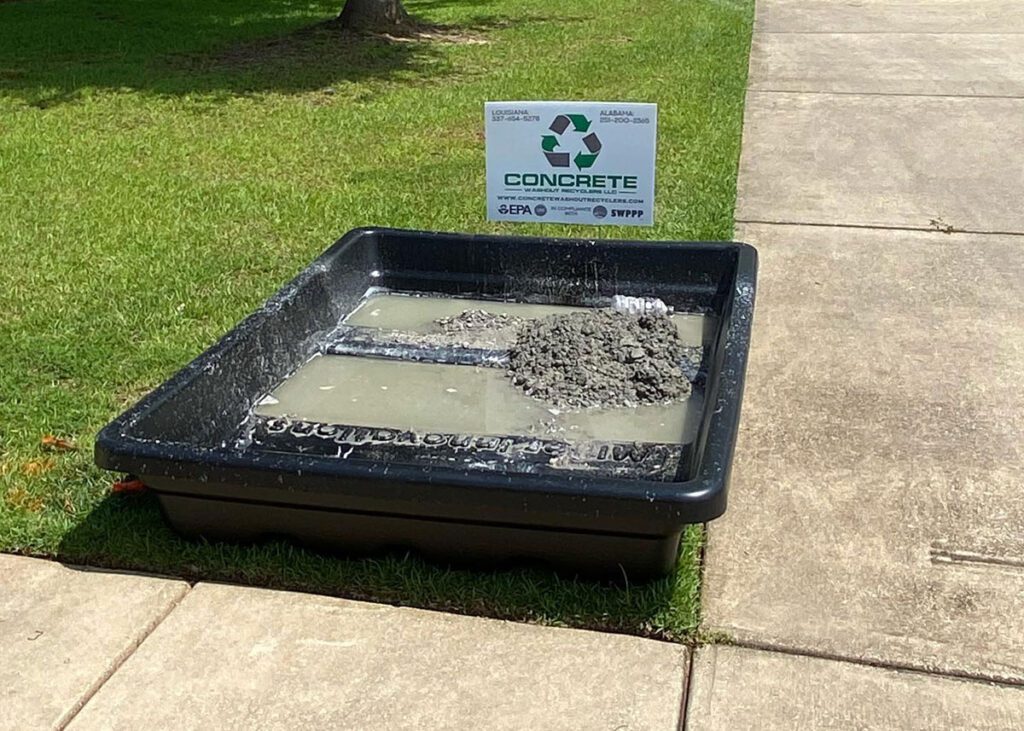
Almost every small concrete pour in the River Region ends the same way: someone rinsing the chute, mixer, and tools into a tarp-lined hole, the back corner of the lot, or down the driveway toward the gutter. It’s the standard cleanup, and most folks never think twice about it. They should. Fresh concrete slurry is highly caustic, federally regulated, and harder on your property than people realize. Here’s why ground disposal is a problem and how a concrete washout basin fits into a normal dumpster rental setup.
What’s On This Page
How Concrete Slurry Damages Soil and Water
Fresh concrete slurry, the milky water that rinses off chutes, pumps, and tools, carries a pH of 12 to 13. That’s similar to oven cleaner or industrial drain opener, and it stays caustic for hours after it leaves the truck.
When that slurry hits the ground, it sterilizes the soil, hardens into a crust that blocks water absorption, and runs off in the next rain into storm drains, ditches, and creeks. Once it reaches a waterway, it raises the water’s pH and kills fish and aquatic insects.
The EPA and the Alabama Department of Environmental Management treat concrete washout as regulated industrial waste under the Clean Water Act. Civil fines for letting it run off your property start in the thousands of dollars per day, per violation, and they apply to homeowners just as much as to contractors.
Why Common Disposal Methods Fall Short
The tarp-lined pit is the classic. The tarp tears, the slurry seeps into the soil before it sets, and rainwater fills the pit and overflows across the property.
Rinsing into the gutter or driveway sends everything straight to a storm drain, which is a direct Clean Water Act violation. Storm drains in this area run untreated to local creeks and the Alabama River.
Dumping into a regular roll-off dumpster doesn’t work either. A standard dumpster has gaps at the door and drainage points underneath, so the slurry leaks out, hardens in the wrong shape, and the haul fee jumps from the extra weight.
And rinsing into a low spot at the back of the lot is the method that gets people in actual trouble. Once that area is contaminated, replanting it is a project of its own.
What a Concrete Washout Basin Is
A concrete washout basin is a leak-proof container built to hold liquid slurry without seeping or contaminating the ground beneath it. Crews rinse chutes, pumps, mixers, and tools directly into the basin. The water evaporates, the cement particles settle and harden, and the whole thing gets hauled off and the concrete recycled. The full list of washout service benefits goes beyond compliance to cleaner jobsites and no soil remediation on the back end.
The Dumpster Guy Montgomery delivers and maintains a specialized washout basin on site, sized for everything from a single residential pour to a multi-day commercial job. It sits flat on the ground, stays as long as the pour schedule needs it, and the rental runs $150 per basin. No pit, no tarps, no liability for what soaked into the dirt.
When to Add a Washout Basin to Your Dumpster Order
Order the washout basin when you order the pour, not the day after. If you’re already renting a 10, 15, or 20-yard dumpster for demo or debris, the basin drops alongside it as a separate container. Hardened chunks from tearing out an old slab or driveway can go in a regular roll-off, but wet slurry from the new pour cannot.
For a residential pour, one washout basin usually covers the whole job. Larger commercial sites can stage multiple basins. At $150 per basin, a washout rental is a small line item on the total cost of the project, and it’s well below the cost of a fine, a soil remediation bill, or replanting a sterilized strip of yard.
River Region Service Area
The Dumpster Guy Montgomery offers concrete washout service across the entire River Region, with dedicated service pages for Montgomery, Prattville, Pine Level, Millbrook, Clanton, Verbena, Marbury, Autaugaville, Hayneville, Hope Hull, Highland Home, Pike Road, Mt Meigs, Wetumpka, Eclectic, Elmore, Coosada, and Deatsville. If a concrete pour is on your schedule, order the washout online the same day you schedule the truck.
Frequently Asked Questions
Can I just dump concrete washout in a hole in my yard?
No. Slurry has a pH of 12 to 13 and is regulated as industrial waste under the Clean Water Act. Even a tarp-lined pit leaks, sterilizes the soil, and overflows in the rain. Civil fines start in the thousands per day, per violation.
What is the difference between a concrete washout basin and a regular dumpster?
A regular roll-off has gaps at the door and drainage points underneath because it’s built for solid debris. A washout basin is leak-proof and engineered to hold wet slurry until the cement settles and hardens.
How much does a concrete washout basin cost?
The Dumpster Guy Montgomery rents the concrete washout basin for $150 per basin. Larger or longer jobs can stage more than one basin on site.
Do homeowners really need a washout basin, or is it just for contractors?
Both. Any pour on your property generates washout that has to go somewhere. If your contractor doesn’t have a plan for it, the default is your yard.
When should I schedule a washout basin?
The same day you schedule the pour. Calling after the truck has left is too late, because the slurry is already on the ground.
What happens to the concrete after pickup?
It’s hauled to a recycling facility, crushed, and reused as aggregate for new construction. Nothing goes to the landfill, and nothing goes onto your property.
Key Takeaways
- Fresh concrete slurry has a pH of 12 to 13, comparable to oven cleaner, and stays caustic for hours.
- Dumping washout on the ground sterilizes soil and runs off into storm drains, which is a Clean Water Act violation with daily fines.
- Tarp-lined pits, gutter rinses, and standard roll-off dumpsters are not legal or practical for liquid concrete waste.
- A leak-proof concrete washout basin is the only compliant option, and at $150 per basin it’s a small line item next to the cost of a pour.
- Schedule the washout basin when you schedule the pour. One basin covers most residential jobs; larger sites can stage more than one.